

PFAS Treatment

How It Works

Because PFAS compounds are extremely stable and water-soluble, specialised processes are required to separate or destroy them from contaminated streams:

1-Influent Characterisation

Water is analysed to determine PFAS types (long-chain vs short-chain) and concentrations to select the appropriate treatment train.

2-Sorption & Filtration Technologies

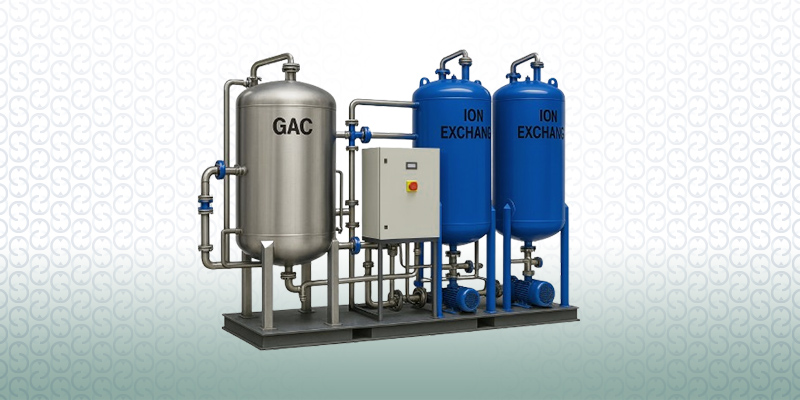
  • Granular Activated Carbon (GAC) adsorbs PFAS to carbon surfaces; effective for long-chain PFAS and often operated in lead-lag configurations.
  • Ion Exchange Resins use charged polymer beads that selectively bind PFAS, including many short-chain compounds, with high capacity and speed.
  • Reverse Osmosis (RO) / Nanofiltration (NF) uses pressure and semi-permeable membranes to reject PFAS molecules based on size and charge.

3-Advanced Oxidation & Polishing

Advanced oxidation processes (AOPs), such as UV/H₂O₂ or ozone, generate reactive radicals that break down co-contaminants and PFAS precursors that may escape primary treatment.

4-Concentrate & Waste Handling

PFAS removed by adsorption or membrane processes are concentrated into spent media, brine or sludge. These streams must be further treated or disposed of — often via high-temperature thermal destruction for irreversible PFAS breakdown.

PFAS treatment

Applications

Contaminated Groundwater

Contaminated Groundwater

Storm water

Stormwater Runoff

Clarification Separation Systems

Wastewater Reuse

Mining water

Mining Water

Retrofit Build Compatibility

Industrial Facility Effluent

New hardware

Municipal Water Supplies

Firefighting Sites

Firefighting Sites

Mobile treatment 1

Mobile Treatment Needs

Core System Components

AquipTec configures PFAS treatment systems by combining adsorption, ion exchange, membrane, oxidation and waste handling technologies to meet specific site needs and regulatory limits.

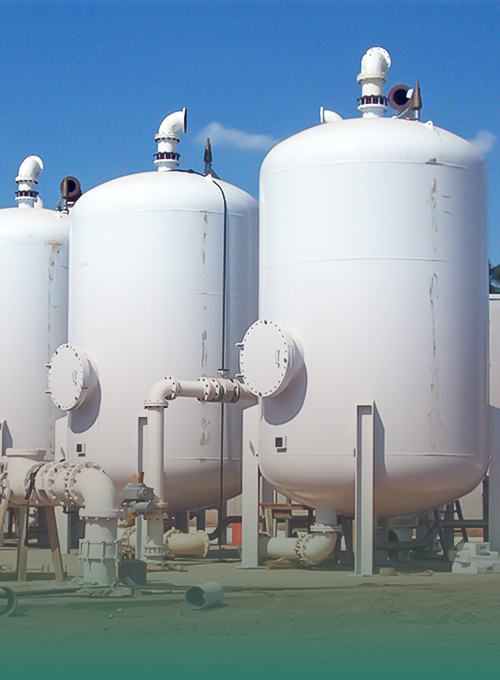
Granular Activated Carbon (GAC) Filters

  • Lead-lag GAC vessels with media monitoring
  • Blanketing and vessel safety controls
  • Breakthrough detection systems
  • GAC filters physically adsorb PFAS molecules onto carbon surfaces, particularly effective for long-chain PFAS.

Ion Exchange Resin Systems

  • Resin vessels with hydrophobic/anion functionalised media
  • Resin regeneration and handling modules
  • Flow controls and pre-filtration
  • Ion exchange resins provide selective PFAS removal and can be tailored for short-chain species.

Membrane Filtration Modules (RO/NF)

  • High-pressure RO or NF membrane stacks
  • Pre-filters to protect membranes
  • Concentrate collection and disposal piping
  • Membrane systems physically separate PFAS from water with very high rejection rates, delivering compliant effluent.

Advanced Oxidation Process (AOP) Units

  • UV reactors with oxidant injection (H₂O₂, ozone)
  • Radical generation and contact chambers
  • Safety interlocks and dosimetry
  • AOPs break down PFAS precursors and co-contaminants to enhance overall system performance.)

Waste Handling & Thermal Destruction Modules

  • Spent media consolidation and packaging
  • Thermal destruction (e.g., plasma arc, incineration) ready-feeds
  • Off-gas control and emission capture
  • Thermal destruction breaks the carbon-fluorine bonds for irreversible PFAS elimination where required.

Key Benefits

New improvement

Highly Effective PFAS Reduction

Combines adsorption, ion exchange and membrane technologies to remove a broad spectrum of PFAS compounds.

New artboard

Optimised Footprint

Compact vessels and skids enable installation in constrained plant spaces.

Improved Water Quality

Improved Water Quality

Produces treated water suitable for discharge or reuse applications.
Comprehensive Waste Handling

Comprehensive Waste Handling

Includes provision for managing spent media, brine and PFAS waste for safe disposal or destruction.

Custom Technology Selection

Customisable Treatment Trains

Modular design allows selection and sequencing of GAC, IX, RO, or thermal methods based on contaminant profile.

New money

Reduced Operational Cost

Targeted sorption and efficient membrane use reduce chemical and energy requirements.

Control system

Advanced Monitoring & Control

Real-time quality tracking maintains performance and alarms for breakthrough.

Australian Regulatory Support

Supports Compliance

Engineered to assist with meeting strict Australian PFAS and discharge standards.

Why Choose AquipTec

Aquiptec delivers PFAS treatment solutions engineered for performance, compliance and adaptability:

  • Technology-neutral engineering to match the right processes to site needs.
  • End-to-end delivery from design through commissioning and ongoing support.
  • Local expertise with Australian regulatory understanding and environmental strategy.
  • Optimised system design for lifecycle performance and operational reliability.

This solution is engineered and delivered exclusively by Aquiptec

Frequently Asked Questions (FAQ)

What are PFAS?

PFAS (per- and polyfluoroalkyl substances) are persistent synthetic chemicals widely used in industry that resist conventional treatment and pose environmental risks.

Effective technologies include GAC adsorption, ion exchange resins and RO/NF membrane filtration; AOPs can polish or treat precursors.

Most sorption and membrane methods transfer PFAS into a concentrated waste; thermal destruction is used for irreversible breakdown.

Yes, modular skids and container units allow integration or retrofit with existing treatment infrastructure.

Yes, properly designed trains can deliver high-quality effluent for non-potable reuse or safe discharge.