


How It Works
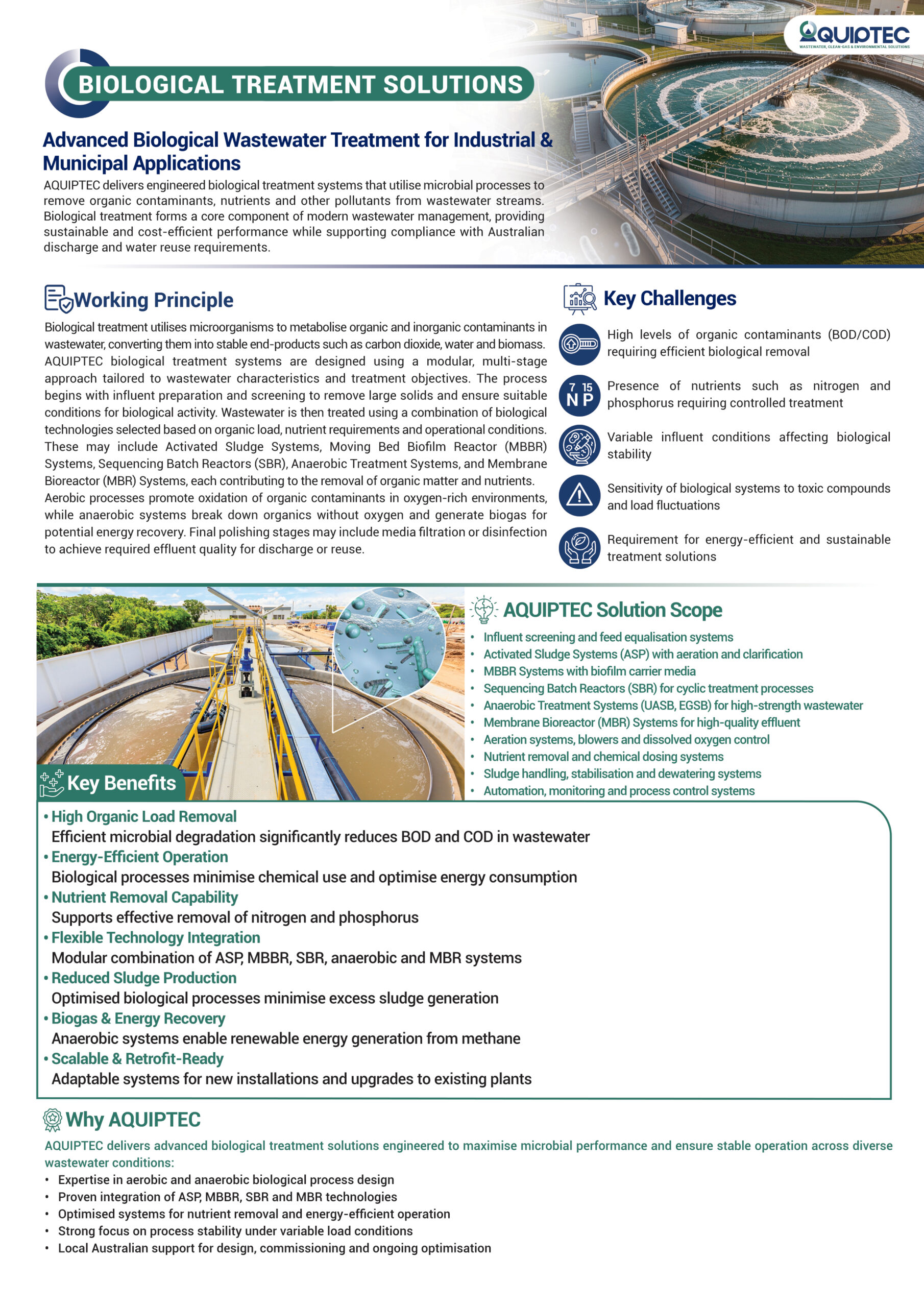
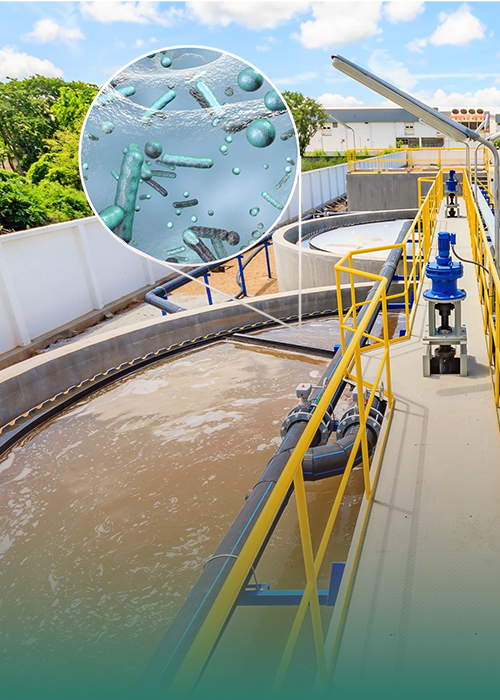
Biological treatment uses natural microorganisms to metabolise and break down organic and inorganic contaminants in wastewater, converting them into stable end-products such as carbon dioxide, water and biomass.
1-Influent Preparation
Wastewater is characterised and screened for solids, organic load, nutrients and toxic levels to select the optimal biological technologies.
2-Aerobic Processes
Microorganisms in oxygen-rich environments consume organic pollutants. Activated sludge, MBBR and SBR systems promote aerobic oxidation of BOD and COD.
3-Anaerobic Processes
In oxygen-free conditions, microbes break down organics and generate biogas (methane), which can be captured for energy recovery, reducing net plant energy use.
4-Polishing & Effluent Conditioning
Advanced systems like Membrane Bioreactors (MBR) offer high-level solids and pathogen removal to achieve regulated discharge or water reuse quality.
5-Sludge Stabilisation
Biomass (biosolids) produced in reactors is stabilised, dewatered and managed for safe disposal or beneficial reuse.
Applications

Municipal Wastewater

Remote Mining Camps
Water Recycling Plants

Petrochemical Streams
Textile Industry

Food Industry

Pulp & Paper Effluents

Chemical Streams

Core System Components
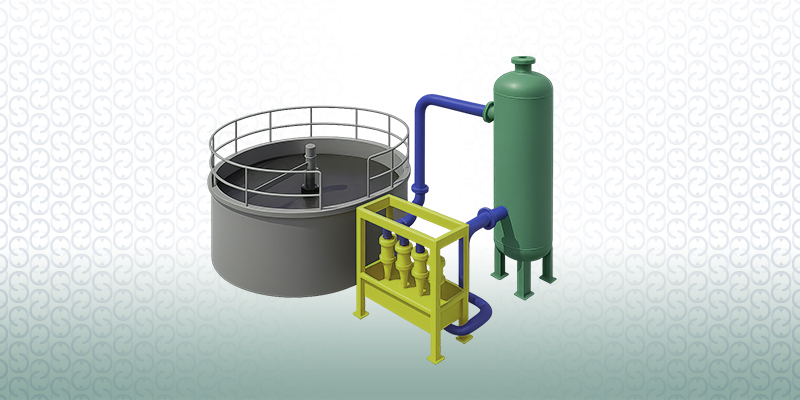
AquipTec configures biological treatment systems by combining proven biological technologies with engineered tanks, aeration systems, media and control systems tailored to each site’s wastewater composition and performance goals.
Activated Sludge Systems (ASP)
Activated sludge systems promote aerobic microbial oxidation of organic matter. Core components include:
• Aeration tanks and blowers
• Fine bubble diffusers or surface aerators
• Clarifiers with return and waste activated sludge lines
• DO and automated control systems
ASP achieves high removal of BOD, COD and suspended solids.
Moving Bed Biofilm Reactor (MBBR)
MBBR systems utilise plastic carrier media that support high microbial growth in a compact reactor. Core components include:
• Biofilm carriers and aeration grid
• Reactor with mixing/aeration system
• Carrier retention screens
• Automated monitoring and control
MBBR offers efficient BOD and ammonia removal with lower footprint and high shock load tolerance.
Sequencing Batch Reactors (SBR)
SBR systems operate in cycles (fill, react, settle, decant) in a single tank. Core components include:
• Reactor tank with controlled valves
• Automated cycle controllers
• Decanter arms and sludge handling
SBR is ideal for variable flow rates and limited space, with excellent nutrient removal capacity.
Anaerobic Treatment Systems
Anaerobic reactors biodegrade organics without oxygen, producing methane-rich biogas. Core components include:
• UASB or EGSB reactors
• Gas-liquid-solid separators
• Biogas collection and utilisation systems
• Temperature and flow control
Anaerobic systems provide energy recovery and lower sludge production.
Membrane Bioreactor (MBR) Systems
MBR combines biological treatment with membrane separation. Core components include:
• Ultrafiltration/microfiltration membrane modules
• Air scouring and backwash systems
• High-pressure feed pumps
• Automated membrane cleaning (CIP)
MBR delivers near-complete removal of BOD, TSS and pathogens for high-quality effluent.
Key Benefits

Energy-Efficient Operation
Bioprocesses use natural microbial activity with lower chemical and energy demand.

Nutrient Removal Capability
Designed systems support removal of nitrogen and phosphorus.

Flexible Technology Combinations
Modular solutions allow integration of ASP, MBBR, SBR, anaerobic or MBR as needed.

Reduced Sludge Production
Many configurations produce less excess sludge than purely chemical methods.

Biogas & Energy Recovery
Anaerobic systems provide renewable energy potential from methane production.

Scalable & Retrofit-Ready
Systems can be scaled for varying capacities or retrofitted into existing plants.

High Organic Load Removal
Efficient microbial degradation significantly reduces BOD and COD in wastewater.

Compliance & Sustainability
Produces stable effluent that supports Australian discharge and reuse standards.
Why Choose AquipTec
AquipTec delivers biological treatment solutions engineered for reliability, compliance and operational efficiency:
- Technology-neutral engineering to match systems with wastewater challenges.
- End-to-end project delivery from design to commissioning and support.
- Local expertise with knowledge of Australian regulatory expectations.
- Solutions optimised for sustainable performance and lifecycle value.
This solution is engineered and delivered exclusively by AquipTec.
Frequently Asked Questions (FAQ)
What is biological wastewater treatment?
It’s a process using microorganisms to convert organic pollutants into harmless substances like CO₂ and water.
Why choose biological over chemical treatment?
Biological treatment uses natural processes that often require less energy and fewer chemicals, producing less secondary pollution.
Can these systems handle industrial wastewater?
Yes, modular systems are designed for industrial effluents with commercial-grade load variations.
Is biogas recovery viable?
Anaerobic systems generate methane-rich biogas that can be captured for power or heating use.
Do biological systems require complex control?
Integrated automation (PLCs/SCADA) allows online monitoring and adaptive adjustments for stable performance.