
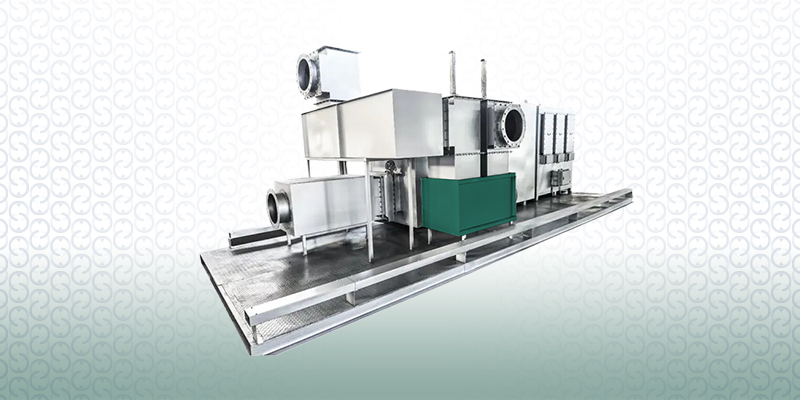

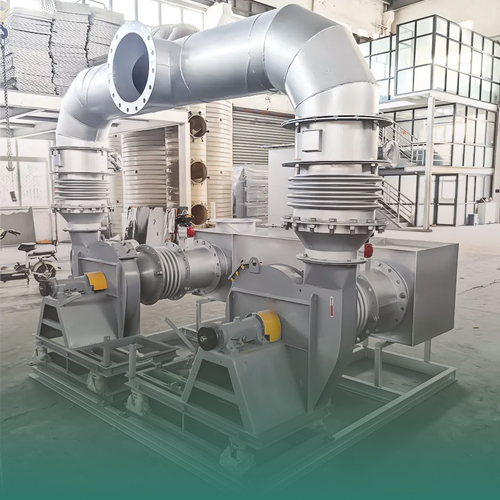


How It Works
Catalytic combustion systems treat VOC-laden air by conditioning the stream, heating it to reaction temperature, and oxidising organics across a catalyst bed. For large-volume, low-concentration VOCs, catalytic combustion is often paired with adsorption concentration (e.g., zeolite wheel or activated carbon) to reduce energy use and equipment size.
1) Characterise the Exhaust Gas Stream
We assess VOC type, concentration, flow rate, temperature and humidity to determine whether direct catalytic oxidation is suitable—or whether an upstream adsorption/concentration stage is required for best lifecycle cost.
2) Pretreatment & Safety Bypass
Particulates, aerosols or sticky compounds are reduced via prefilters/demisters, and an emergency bypass (where required by design) provides an operational pathway during maintenance or abnormal conditions.
3) Controlled Heating to Reaction Temperature
The stream is preheated (often with heat recovery) before entering the catalyst zone. Catalytic oxidizers generally operate in the range of ~650–1000°F (about 343–538°C), depending on VOC chemistry and catalyst selection.
4) Catalytic Oxidation (Combustion on Catalyst Media)
VOCs are oxidised on the catalyst surface to CO₂ and water at lower temperatures than thermal incineration, reducing auxiliary fuel requirements in many applications.
5) Heat Recovery & Stable Continuous Operation
Recovered heat can be used to preheat incoming air, improving overall energy efficiency. In adsorption-concentration systems, hot gas can also be used for rotor regeneration/desorption (often controlled around ~180–220°C, depending on design).
Applications
Aquiptec catalytic combustion systems are used across a wide range of industrial VOC and odour-control duties, including:

Paint Booths

Coating Lines & Curing Ovens

Resin, Composites and Fibreglass Manufacturing

Waste Handling

Printing, Packaging and Laminating Exhaust

Pharmaceutical Ventilation
VOC Control

Chemical processing vent streams

Core System Components
For large-volume, low-concentration VOC streams, adsorption and concentration significantly improve catalytic oxidation efficiency by reducing airflow and increasing VOC loading. Aquiptec integrates these technologies upstream of catalytic combustion to optimise energy use and system footprint.
Activated Carbon Adsorption
Activated carbon systems capture organic vapours using high-surface-area media and are designed based on solvent type, flowrate and operating conditions.
• Granular, honeycomb or fibre carbon media options
• Multi-bed configurations for continuous operation
• Automatic switching between adsorption and regeneration cycles
• Temperature and breakthrough monitoring for process stability
• Regeneration using hot air or steam, with desorbed VOCs directed to oxidation or recovery
Zeolite Rotor Concentration Technology
Zeolite concentration wheels are ideal for high airflow and low VOC concentration applications such as coating and drying lines.
• Structured honeycomb zeolite media with high thermal stability
• Continuous rotation separating adsorption and desorption zones
• Adjustable rotor speed to match VOC loading
• Desorption temperatures typically around 180–220°C
• High concentration ratios that reduce oxidiser size and fuel demand
Integrated Concentration + Catalytic Oxidation
Combining adsorption with catalytic combustion delivers:
• Lower energy consumption and operating cost
• Smaller downstream oxidation systems
• Stable and predictable VOC loading
• Improved overall environmental performance
System selection is based on VOC chemistry, airflow, moisture, safety and regulatory requirements.
Key Benefits

Lower Operating Temperature
Catalyst-assisted oxidation reduces the temperature required versus thermal oxidation in many cases.

Reduced Fuel Consumption
Lower reaction temperature and heat recovery can significantly cut energy use.

High VOC Destruction Performance
VOC conversion to CO₂ & water when correctly designed and operated.

Compact, Modular Designs
Suitable for retrofit projects and constrained sites (layout dependent).

Works with Concentration Upstream
Pairs well with zeolite/activated carbon concentration for large-flow, low-concentration VOC duties.

Automation-Ready
PLC-based control supports stable operation and reduced operator burden.
Why Choose AquipTec
Aquiptec delivers engineered catalytic combustion solutions that enhance air compliance and operating efficiency:
- Technology-neutral selection: direct catalytic oxidation vs. adsorption + catalytic based on your stream conditions.
- End-to-end delivery from engineering through commissioning and support
- Designs aligned to Australian site safety expectations and licence-driven performance targets
- Optimised for lifecycle value (energy, maintainability, catalyst management)
This solution is engineered and delivered exclusively by Aquiptec
Frequently Asked Questions (FAQ)
When do you recommend adding an adsorption/concentration stage?
Typically for large-volume, low-concentration VOC streams where direct oxidation would be energy-intensive; concentration (zeolite wheel or activated carbon) can reduce oxidizer size and operating cost
What operating temperatures are typical for catalytic oxidizers?
Catalytic oxidizers generally operate around 650–1000°F (about 343–538°C), depending on VOC type and catalyst selection.
How is stable performance maintained?
Through automated control of temperature, flow and pressure, plus interlocks and alarms; performance indicators often include outlet VOC and temperature-based control logic.
Can these systems be retrofitted to existing extraction systems?
Yes, most projects integrate with existing ductwork and fans, but final feasibility depends on flow, temperature, space, and shutdown access.
What can damage catalyst performance?
Particulates, aerosols, certain catalyst poisons (compound-dependent), and uncontrolled temperature excursions—so pretreatment and temperature control are key.