Have any questions? call us

Slurry Separation Unit

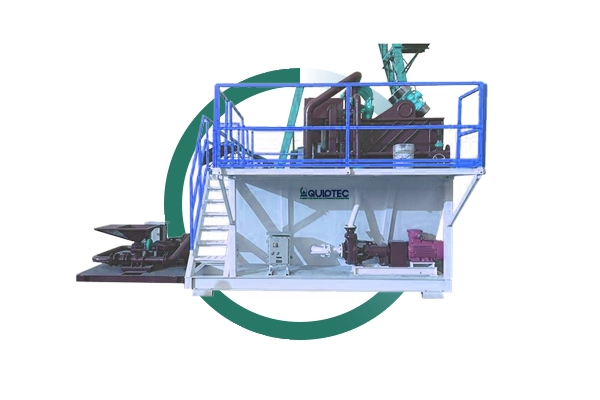




| Model | AQT120 |
| Treating Capacity (m³/h) | 120 |
| Separation Point d50 (μm) | 15 – 44 |
| Dimensions (m) | 7.5 × 4.3 × 4.7 |
| Total Power (kW) | 97.38 |
| Weight (kg) | 10000 |

Features
Standard Features
- Multi-stage separation system for progressive removal of solids
- Shale shaker for the removal of coarse particles
- Hydrocyclones for intermediate and fine separation (above 20 microns)
- Decanter centrifuge for removal of fine solids (2–5 microns)
- Chemically enhanced centrifuge for the removal of ultra-fine particles (down to approximately 1 micron)
- Double-deck shale shaker for increased capacity with reduced footprint
- High G-force shale shaker for efficient coarse separation
- Integrated centrifugal pump system for slurry transfer
- Dewatering shakers for effective solids drying and discharge
- Complete system integration for continuous operation
Options & Accessories
- Customised system design based on project requirements
- Different capacity configurations for various TBM applications
- Additional hydrocyclone stages for enhanced separation
- Chemical dosing system for ultra-fine particle separation
- Advanced control systems and monitoring solutions

Working Principle
The TBM (Tunnel Boring Machine) Slurry Separation Plant operates through a multi-stage separation process. The slurry first passes through a coarse shale shaker to remove large particles. It is then pumped to hydrocyclones for further separation of solids. A dewatering shaker removes remaining solids, while fine hydrocyclones separate smaller particles. Finally, a decanter centrifuge removes ultra-fine solids to achieve high-quality slurry recovery. Clean slurry is recirculated back into the TBM system, while separated solids are discharged for disposal.

Key Benefits
- Efficient Slurry Separation
Removes coarse and fine solids from slurry, ensuring stable performance during TBM operations. - Improved Operational Efficiency
Supports continuous tunnelling by maintaining slurry quality and circulation. - Reduced Operating Costs
Recycles slurry and reduces the need for fresh materials and waste disposal. - Compact & Modular Design
Compact structure allows easy transport, installation, and integration on site. - High Separation Performance
Combines high-G-force shale shakers and centrifuges for efficient multi-stage separation. - Flexible & Customisable System
Custom-designed configurations available to suit different TBM and project requirements.


