



Flue Gas Desulfurisation

How It Works

Flue Gas Desulfurisation (FGD) is a proven air pollution control process used to remove sulphur dioxide (SO₂) from flue gases generated by combustion and high-temperature industrial processes.

1.Flue Gas Inlet

Sulphur-bearing exhaust gases are directed from the boiler, furnace, kiln, or incinerator into the Flue Gas Desulfurisation system.

2.Sorbent Injection or Contact

An alkaline reagent such as limestone, lime, or sodium-based sorbents is introduced into the flue gas using wet, semi-dry, or dry desulfurisation technologies.

3.Chemical Reaction

The sorbent reacts with SO₂ to form stable, neutral compounds such as calcium sulfite, calcium sulfate, or sodium salts.

4.Separation and Clean Gas Discharge

Reaction by-products are separated using cyclones, fabric filters, or scrubbers before the treated gas is safely discharged to atmosphere.

Flue Gas Desulfurisation

Applications

Power generation

Power generation

Cement

Cement

Petrochemical

Petrochemical facilities

Boilers furnaces

Boilers and Furnaces

Metal smelting

Metal smelting

Mineral processing

Mineral processing

Core System Components

AquipTec designs Flue Gas Desulfurisation systems using wet, semi-dry, or dry technologies, with each configuration incorporating purpose-designed components to achieve reliable and efficient SO₂ removal under specific operating conditions.

Wet FGD System Components

Wet Flue Gas Desulfurisation systems are typically selected for high sulphur loads and applications requiring maximum SO₂ removal efficiency.

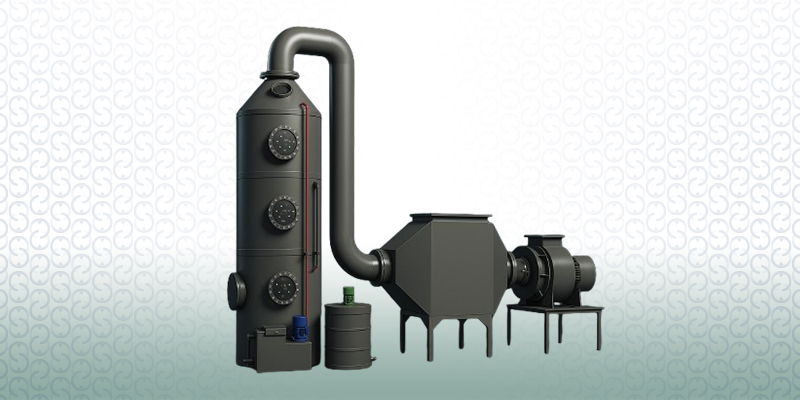
  • Absorber / Scrubber Tower
    A vertical vessel where flue gas comes into direct contact with limestone or lime slurry, enabling intensive gas–liquid mass transfer.
  • Reagent Preparation and Slurry Handling System
    Includes reagent storage, milling (where required), slurry tanks, and recirculation pumps to maintain consistent reagent quality and reaction performance.
  • Spray Header and Nozzle Assemblies
    Engineered to ensure uniform slurry distribution and maximise SO₂ absorption efficiency.
  • Mist Eliminators
    High-efficiency separators that remove entrained liquid droplets prior to gas discharge, protecting downstream equipment and stacks.
  • Oxidation and By-Product Management
    Converts reaction products to gypsum where required and manages dewatering, storage, or beneficial reuse.


Semi-Dry and Dry FGD Integration via Dry Sorbent Injection (DSI)

For semi-dry and dry flue gas desulfurisation applications, AquipTec delivers these solutions under its Dry Sorbent Injection (DSI) technology platform. Semi-dry and dry FGD systems utilise direct sorbent injection, atomisation, gas-solid contact, and downstream particulate capture to achieve effective SO₂ reduction with minimal or no wastewater generation. These configurations are particularly well suited to retrofit installations, water-limited sites, and low-to-medium sulfur concentrations.

Refer to the Dry Sorbent Injection (DSI) solution page for detailed system descriptions and component-level design.

Key Benefits

New improvement

High SO₂ Removal Efficiency

Achieves high SO₂ removal (>90%) to support regulatory compliance and environmental performance.

Technology Flexibility

Technology Flexibility

Wet, semi-dry and dry FGD configurations available to match operational priorities.

NWater Energy Optimisation

Water & Energy Optimisation

Semi-dry and dry options reduce water use and energy demand versus conventional wet scrubbers.

By Product Management

By-Product Management

Wet FGD can produce gypsum for reuse, while dry systems generate manageable solids for disposal.

Retrofit Build Compatibility

Retrofit & New Build Compatibility

FGD systems can be engineered for existing plants or new installations with minimal disruption.

Robust Low Maintenance Design

Robust, Low-Maintenance Design

Engineered components and automated controls deliver reliable performance.

Improved Air Quality

Improved Air Quality

Reduces SO₂ emissions, helping protect community health and environmental amenity.

Australian Regulatory Support

Australian Regulatory Support

Systems designed to meet current and anticipated sulphur emission requirements in Australia.

Why Choose AquipTec

AquipTec delivers engineering-led, independent Flue Gas Desulfurisation solutions tailored to Australian industrial conditions and regulatory frameworks.

  • Technology-neutral system selection
  • Compliance-focused engineering and design
  • End-to-end project delivery capability
  • Local engineering support and long-term optimisation

This solution is engineered and delivered exclusively by AquipTec.

Frequently Asked Questions (FAQ)

What determines the most suitable FGD technology for a site?

Key factors include sulfur concentration, required removal efficiency, water availability, plant layout, retrofit constraints, and operating cost considerations.

Yes. Depending on reagent selection and system design, FGD systems can also reduce acid gases such as hydrogen chloride (HCl) and hydrogen fluoride (HF).

Yes. Dry and semi-dry FGD technologies are particularly well suited to Australian sites where water availability is limited.

Wet systems can produce saleable gypsum; dry systems produce solids requiring controlled disposal.