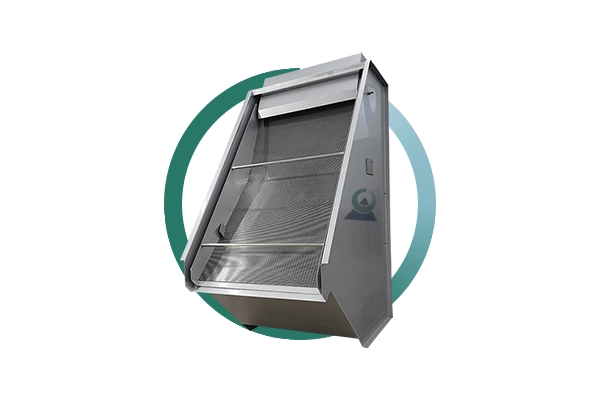
Static Screen

Static Screen

Solids Handling, Screening & Sludge Treatment Equipment
Static screen cover

The Static Screen is a simple solution for separating solids from liquids in wastewater. It uses an inclined wedgewire screen to catch solids and fibres while letting clean water pass through. It works without electricity, which lowers operating costs and improves reliability. The smooth design helps prevent clogging and makes cleaning easy, so maintenance stays low. Made from corrosion-resistant stainless steel, it is durable and long-lasting. Its compact design also saves space while still handling high flow rates. Overall, it’s a cost-effective and reliable option for wastewater pre-treatment.

FA 01

1. What is a static screen filter?

A static screen filter is a simple device used to remove solids from wastewater. It uses an inclined stainless-steel screen to separate solid particles from liquid without needing electricity.

2. What are the main advantages of a static screen?

Static screens are energy-free, easy to maintain, and highly reliable. They have a compact design, resist clogging, and are built from corrosion-resistant stainless steel for long-term use.

3. Where can a static screen be used?

Static screens are widely used in wastewater treatment plants, food processing, industrial facilities, and any system that needs to remove suspended solids, fibres, or debris before further treatment.

4. What materials are used in the static screen?

Most static screens are made from stainless steel, typically SS304 or SS316, which provides strong corrosion resistance and long service life.

Specification and Parameters 01
Model Capacity (m³/hr) Capacity (m³/hr) Capacity (m³/hr) L (mm) W (mm) H (mm)
Mesh 1.5 mm 1.0 mm 0.5 mm
HS-300 ~16 ~13 ~6 1420 430 1900
HS-500 ~35 ~22 ~10 1420 630 1900
HS-600 ~42 ~27 ~12 1420 730 1900
HS-700 ~48 ~31 ~15 1420 830 1900
HS-800 ~55 ~35 ~17 1420 930 1900
HS-900 ~62 ~40 ~19 1420 1030 1900
HS-1000 ~70 ~45 ~22 1420 1130 1900
HS-1200 ~77 ~52 ~26 1420 1330 1900
HS-1500 ~100 ~65 ~32 1420 1630 1900
HS-1800 ~120 ~80 ~40 1420 1930 1900
Feature 01

Features

Standard Features

  • Inclined wedge‑wire arc screen assembly with profile wire slots.
  • Overflow distribution weir for uniform loading.
  • Stainless steel frame and guards (SS304 standard; SS316 available).
  • Open‑channel or tank‑top mounting with solids chute and filtrate outlet.
  • Easy cleaning via hose‑down; minimal moving parts.

Options & Accessories

  • Material upgrade to SS316 or duplex (on request).
  • Slot sizes (typ.): 0.5 / 1.0 / 1.5 mm.
  • Custom inlet weir, covers, spray wash header, and splash guards.
  • Support stands, drain pan, flanged outlets, and instrumentation ports.
  • Integration with upstream coarse screens or downstream DAF/dewatering system.

Working principl 01

Working Principle

The static screen uses a stainless-steel arc-shaped screen made of wedge-shaped bars. Wastewater is evenly distributed over the inclined screen surface via an overflow weir. Because the screen has narrow, smooth gaps on the front and wider, smooth drainage paths on the back, solids are intercepted on the front while the filtered water flows through the gaps. Under hydraulic pressure, captured solids slide downward along the screen to the lower end for automatic discharge, achieving solid-liquid separation.

 

Key Benefits 01

Key Benefits

  • No power required: passive operation reduces OPEX and improves reliability.
  • High capture efficiency: wedge‑wire profile screen intercepts suspended solids and fibres.
  • Low maintenance: smooth slots resist clogging; easy washdown and access.
  • All‑stainless construction: corrosion‑resistant structure with long service life (SS304/SS316 optional).
  • Compact footprint: inclined arc screen provides high throughput in a small space.
Key-mobile

Key Benefits

  • No power required: passive operation reduces OPEX and improves reliability.
  • High capture efficiency: wedge‑wire profile screen intercepts suspended solids and fibres.
  • Low maintenance: smooth slots resist clogging; easy washdown and access.
  • All‑stainless construction: corrosion‑resistant structure with long service life (SS304/SS316 optional).
  • Compact footprint: inclined arc screen provides high throughput in a small space.
working-mobile

Working Principle

The static screen uses a stainless-steel arc-shaped screen made of wedge-shaped bars. Wastewater is evenly distributed over the inclined screen surface via an overflow weir. Because the screen has narrow, smooth gaps on the front and wider, smooth drainage paths on the back, solids are intercepted on the front while the filtered water flows through the gaps. Under hydraulic pressure, captured solids slide downward along the screen to the lower end for automatic discharge, achieving solid-liquid separation.


Features-mobile

Features

Standard Features

  • Inclined wedge‑wire arc screen assembly with profile wire slots.
  • Overflow distribution weir for uniform loading.
  • Stainless steel frame and guards (SS304 standard; SS316 available).
  • Open‑channel or tank‑top mounting with solids chute and filtrate outlet.
  • Easy cleaning via hose‑down; minimal moving parts.

Options & Accessories

  • Material upgrade to SS316 or duplex (on request).
  • Slot sizes (typ.): 0.5 / 1.0 / 1.5 mm.
  • Custom inlet weir, covers, spray wash header, and splash guards.
  • Support stands, drain pan, flanged outlets, and instrumentation ports.
  • Integration with upstream coarse screens or downstream DAF/dewatering system.
SaP
Model Capacity (m³/hr) Capacity (m³/hr) Capacity (m³/hr) L (mm) W (mm) H (mm)
Mesh 1.5 mm 1.0 mm 0.5 mm
HS-300 ~16 ~13 ~6 1420 430 1900
HS-500 ~35 ~22 ~10 1420 630 1900
HS-600 ~42 ~27 ~12 1420 730 1900
HS-700 ~48 ~31 ~15 1420 830 1900
HS-800 ~55 ~35 ~17 1420 930 1900
HS-900 ~62 ~40 ~19 1420 1030 1900
HS-1000 ~70 ~45 ~22 1420 1130 1900
HS-1200 ~77 ~52 ~26 1420 1330 1900
HS-1500 ~100 ~65 ~32 1420 1630 1900
HS-1800 ~120 ~80 ~40 1420 1930 1900
FAQ

1. What is a static screen filter?

A static screen filter is a simple device used to remove solids from wastewater. It uses an inclined stainless-steel screen to separate solid particles from liquid without needing electricity.

2. What are the main advantages of a static screen?

Static screens are energy-free, easy to maintain, and highly reliable. They have a compact design, resist clogging, and are built from corrosion-resistant stainless steel for long-term use.

3. Where can a static screen be used?

Static screens are widely used in wastewater treatment plants, food processing, industrial facilities, and any system that needs to remove suspended solids, fibres, or debris before further treatment.

4. What materials are used in the static screen?

Most static screens are made from stainless steel, typically SS304 or SS316, which provides strong corrosion resistance and long service life.