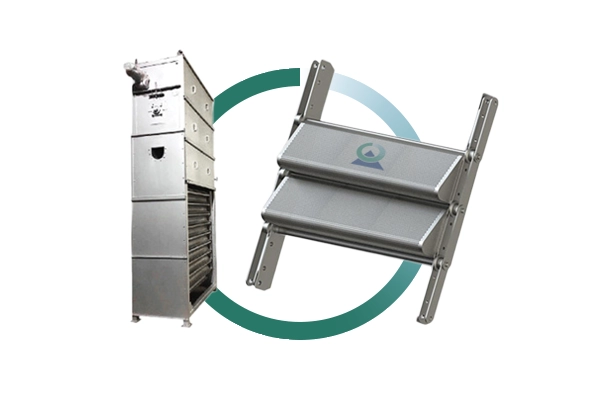
Band Screen

Band Screen

Solids Handling, Screening & Sludge Treatment Equipment
Band screen main image

The Band Screen is a high-efficiency system that removes fine debris like plastics, fibres, and organic solids from wastewater. It uses perforated plates or mesh to filter material and protect downstream equipment. It cleans itself automatically using backwashing or raking, which helps prevent clogging and keeps maintenance low. Its compact, vertical design saves space and makes installation easy in both new and existing plants. It runs continuously, handles high flow rates, and uses little energy. It’s suitable for both municipal and industrial use, helping improve water quality, meet environmental standards, and work with smart monitoring systems for better performance.

FA 01

1. What is a band screen used for?

A band screen is used to remove debris like plastics, fibres, and solids from wastewater before further treatment.

2. What size particles can it remove?

It can filter small particles, typically from 0.5 mm to 10 mm, depending on the screen type.

3. Does the band screen need manual cleaning?

No, it has an automatic cleaning system that removes debris during operation, reducing the need for manual work.

4. Where can a band screen be used?

It is used in municipal wastewater plants, industrial facilities, stormwater systems, and agricultural water treatment.

Specification and Parameters 01
Model AQT-IEFGS-1000 AQT-IEFGS-1200 AQT-IEFGS-1400 AQT-IEFGS-1600
Screen Plate Width (mm) 1000 1200 1400 1600
Channel Width (mm) ≥1200
Channel Depth (mm) 1000–5000
Screen Plate Hole Diameter (mm) φ2 / φ3 / φ5
Flow Rate (m/s) ≤0.6
Allowable Water Level (mm) ≤300
Motor Power (kW) 0.37–2.2
Washing Water Pressure (MPa) ≥0.5


Feature 01

Features

Standard Features

  • Precision perforated plates or mesh (0.5–10 mm)
  • Automatic backwashing or raking
  • Corrosion-resistant materials (stainless steel, polymers)
  • Compact/vertical structural options
  • Low power consumption compared to bar screens
  • IoT sensor compatibility for monitoring

Options & Accessories

  • Multiple Screen Widths: Models in 1000, 1200, 1400, 1600 mm plate widths
  • Flexible Channel Depths: 1,000 mm to 5,000 mm
  • Selectable Aperture Sizes: φ2, φ3, φ5 mm options
  • Washing System Upgrades: Higher water pressure or alternative flushing designs

Working principl 01

Working Principle

During operation, a geared drive assembly rotates Geneva wheels, which, in turn, drive the conveyor chains on both sides of the filter screen. As the screen rises, sewage held on the screen is discharged by gravity. Remaining water is washed off by a flushing system. Filtered water enters the chamber between the screens and is automatically discharged from the machine.

Key Benefits 01

Key Benefits

  • High-Efficiency Debris Removal:
    Uses precision perforated plates or mesh (0.5–10 mm) to reliably capture plastics, fibres, grit, and organic solids from influent water. This improves downstream process efficiency and protects pumps and other treatment equipment.
  • Self-Cleaning & Low Maintenance:
    Equipped with automatic backwashing or mechanical raking systems that remove accumulated debris during operation. This reduces manual intervention, prevents clogging, and minimises equipment downtime.
  • Space-Saving Design:
    The compact and vertical configurations allow installation in channels with limited width or depth. This makes the Band Screen an excellent choice for retrofitting older plants or integrating them into new projects with tight space constraints.
  • Continuous Operation:
    Designed for uninterrupted screening at high flow rates (up to 5,000 m³/h), maintaining consistent filtration performance even during peak loads or fluctuating flow conditions.
  • Energy Efficiency:
    Requires significantly less energy compared to traditional bar screens because of an optimised mechanical design and efficient drive components, lowering operating costs.
  • Versatility:
    Suitable for a wide range of applications such as municipal sewage pretreatment, industrial wastewater reuse, stormwater filtration, and agricultural runoff, providing reliable screening performance in various environments.
  • Environmental Compliance:
    Effectively removes fine debris, plastics, and organics, which contribute to environmental pollution, helping facilities meet regulatory discharge standards and improving overall water quality.
  • Smart Monitoring Integration:
    Optional IoT-enabled sensors provide real-time data on screen performance, blockage levels, and operational status, enabling predictive maintenance and reducing unexpected failures.


Key-mobile

Key Benefits

  • High-Efficiency Debris Removal:
    Uses precision perforated plates or mesh (0.5–10 mm) to reliably capture plastics, fibres, grit, and organic solids from influent water. This improves downstream process efficiency and protects pumps and other treatment equipment.
  • Self-Cleaning & Low Maintenance:
    Equipped with automatic backwashing or mechanical raking systems that remove accumulated debris during operation. This reduces manual intervention, prevents clogging, and minimises equipment downtime.
  • Space-Saving Design:
    The compact and vertical configurations allow installation in channels with limited width or depth. This makes the Band Screen an excellent choice for retrofitting older plants or integrating them into new projects with tight space constraints.
  • Continuous Operation:
    Designed for uninterrupted screening at high flow rates (up to 5,000 m³/h), maintaining consistent filtration performance even during peak loads or fluctuating flow conditions.
  • Energy Efficiency:
    Requires significantly less energy compared to traditional bar screens because of an optimised mechanical design and efficient drive components, lowering operating costs.
  • Versatility:
    Suitable for a wide range of applications such as municipal sewage pretreatment, industrial wastewater reuse, stormwater filtration, and agricultural runoff, providing reliable screening performance in various environments.
  • Environmental Compliance:
    Effectively removes fine debris, plastics, and organics, which contribute to environmental pollution, helping facilities meet regulatory discharge standards and improving overall water quality.
  • Smart Monitoring Integration:
    Optional IoT-enabled sensors provide real-time data on screen performance, blockage levels, and operational status, enabling predictive maintenance and reducing unexpected failures.


working-mobile

Working Principle

During operation, a geared drive assembly rotates Geneva wheels, which, in turn, drive the conveyor chains on both sides of the filter screen. As the screen rises, sewage held on the screen is discharged by gravity. Remaining water is washed off by a flushing system. Filtered water enters the chamber between the screens and is automatically discharged from the machine.

Features-mobile

Features

Standard Features

  • Precision perforated plates or mesh (0.5–10 mm)
  • Automatic backwashing or raking
  • Corrosion-resistant materials (stainless steel, polymers)
  • Compact/vertical structural options
  • Low power consumption compared to bar screens
  • IoT sensor compatibility for monitoring

Options & Accessories

  • Multiple Screen Widths: Models in 1000, 1200, 1400, 1600 mm plate widths
  • Flexible Channel Depths: 1,000 mm to 5,000 mm
  • Selectable Aperture Sizes: φ2, φ3, φ5 mm options
  • Washing System Upgrades: Higher water pressure or alternative flushing designs
SaP
Model AQT-IEFGS-1000 AQT-IEFGS-1200 AQT-IEFGS-1400 AQT-IEFGS-1600
Screen Plate Width (mm) 1000 1200 1400 1600
Channel Width (mm) ≥1200
Channel Depth (mm) 1000–5000
Screen Plate Hole Diameter (mm) φ2 / φ3 / φ5
Flow Rate (m/s) ≤0.6
Allowable Water Level (mm) ≤300
Motor Power (kW) 0.37–2.2
Washing Water Pressure (MPa) ≥0.5


FAQ

1. What is a band screen used for?

A band screen is used to remove debris like plastics, fibres, and solids from wastewater before further treatment.

2. What size particles can it remove?

It can filter small particles, typically from 0.5 mm to 10 mm, depending on the screen type.

3. Does the band screen need manual cleaning?

No, it has an automatic cleaning system that removes debris during operation, reducing the need for manual work.

4. Where can a band screen be used?

It is used in municipal wastewater plants, industrial facilities, stormwater systems, and agricultural water treatment.