
Portable Sludge Dewatering & Reduction Skid (PSDS)






Features
Standard Features
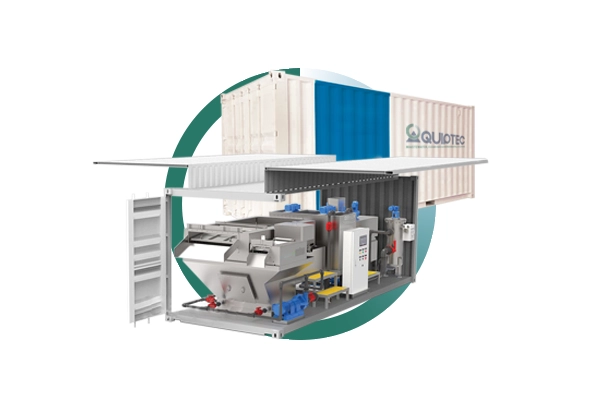
- Containerised design for quick, space-efficient setup.
- Automatic Cake Discharge for easy sludge removal.
- Hydraulic ventilation wings for simple, one-person operation.
- PLC automation with scientifically programmed logic for fully automatic control. Quick Installation – only piping and power connections required.
- Durable high intensity builds for long service life.
Options & Accessories
- Insulated structure for warm-cold-climate operation.
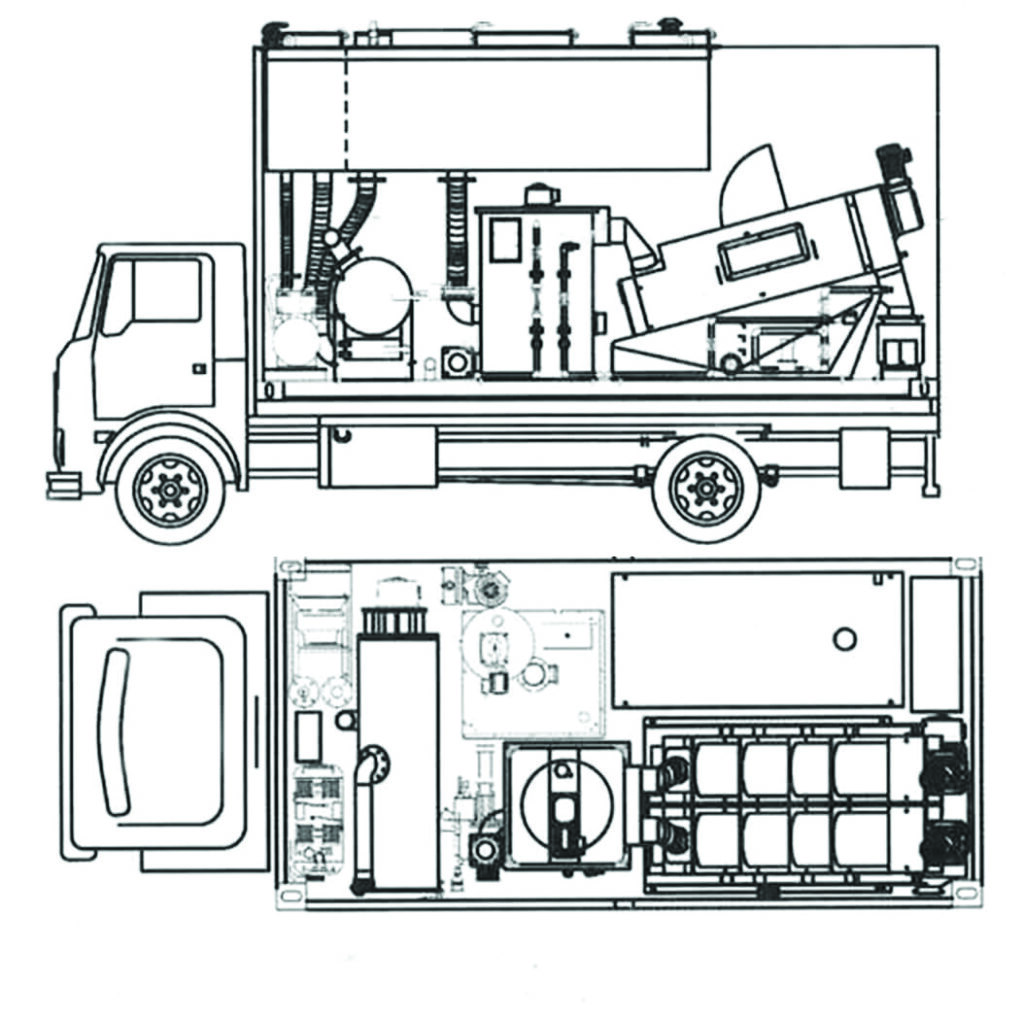
- Custom container sizes to fit standard transport vehicles.
- Remote monitoring for efficient control and troubleshooting.

Working Principle
The Portable Sludge Dewatering & Reduction Skid (PSDS) brings every key stage of sludge treatment—pumping, polymer preparation, solid–liquid separation, filtrate drainage and optional power generation—into a single skid-mounted container. Raw sludge is pumped in, automatically dosed with polymer in an integrated mixing station, and then dewatered in a high-efficiency separation unit. Clarified liquid is discharged through dedicated outlets, while dewatered sludge cake is automatically expelled through the rear door into bins or trucks.
Operating as a closed system, the PSDS prevents odours and spillage and can be set up in hours for either long-term or temporary service. Double ventilation wings provide natural airflow in warm weather, while optional insulation and air conditioning ensure freeze-proof operation and operator comfort in cold climates. Only inlet, outlet, and power connections are required on-site for true “plug-and-play” use.

Key Benefits
- Compact & Mobile Development: Containerised and skid-mounted design fits standard transport sizes (4.5–13 m) for easy relocation and rapid setup at multiple sites.
- High Capacity with Lower Operating Costs: Processes 10–50 m³/h of sludge while reducing manpower, polymer consumption and sludge-haulage costs compared with conventional methods.
- True Plug-and-Play Operation: Quick on-site installation—only connect inlet, outlet and power. PLC-based controls deliver fully automated start-up, operation and shutdown.
- Automatic Sludge Cake Discharge: Rear door opens for clean, hands-free removal of dewatered cake, improving hygiene and safety.
- Seasonal Flexibility & Operator Comfort: Double ventilation wings open across the full width for summer airflow; optional insulation and air-conditioning ensure freeze-proof operation in cold climates.
- Minimal Staffing Requirement: Designed for single operator use: all intake/discharge lines pre-plumbed, all functions accessible from a central control panel.
- Durable & Long-Life Construction: Heavy-duty container structure and corrosion-resistant internals ensure reliable service under demanding conditions.


