DAF System

DAF System

Solids Handling, Screening & Sludge Treatment Equipment
Daf system cover

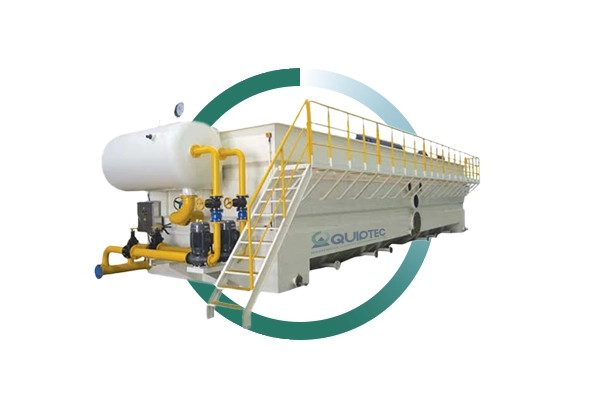
The DAF system is used to separate solids from wastewater. It creates tiny air bubbles that attach to particles and lift them to the surface, where they can be easily removed. It works efficiently and produces clean water with low levels of suspended solids. The system is compact, runs automatically, and can be controlled with a single button. It also supports remote monitoring for easier operation. Its space-saving design and flexible capacity make it suitable for both industrial and municipal use. Overall, it’s a reliable and efficient solution for water treatment and purification.

FA 01

1. What is a DAF system?

A Dissolved Air Flotation (DAF) system is a wastewater treatment solution that removes suspended solids, oil, and grease by using fine air bubbles to float contaminants to the surface.

2. What are the main advantages of a DAF system?

DAF systems accurately separate solids from water, have a compact design, low sludge volume, and more. As a result, there would be very low suspended solids in treated water.

3. Where can a DAF system be used?

DAF systems are widely used in industrial wastewater treatment, food processing plants, oil and gas facilities, and municipal treatment plants to remove solids, fats, oils, and grease.

4. Is the DAF system easy to operate?

Yes, modern DAF systems are designed for simple operation with automated controls, often allowing one-button start and minimal operator involvement.

Specification and Parameters 01
Model Capacity (m³/h) L (mm) W (mm) H (mm) Net Wt (T) Running Wt (T) Total Power (kW) Reflux Pump (kW) Air Compressor (kW) Skimmer (kW) Mixer1 (kW) Mixer2 (kW) Material
AQT-DAF005 5 2800 1000 2100 3 8 4.75 3 0.55 0.1 0.55 0.55 Carbon steel
AQT-DAF010 10 3200 1200 2200 4 12 4.75 3 0.55 0.1 0.55 0.55 Carbon steel
AQT-DAF025 25 5000 1500 1350 5.5 21 5.85 3.7 0.75 0.1 0.75 0.75 Carbon steel
AQT-DAF050 50 6500 2000 2500 7 36 9.05 5.5 1.5 0.2 1.1 1.1 Carbon steel
AQT-DAF080 80 7600 2600 2600 9 55 11.05 7.5 1.5 0.2 1.1 0.75 Carbon steel
AQT-DAF100 100 8300 3000 3000 12 70 16.2 7.5 2.2 0.4 1.5 1.1 Carbon steel


Feature 01

Features

Standard Features

  • Bubble Size ≤10 µm for efficient flotation.
  • Dissolved Gas Efficiency >95% for stable performance.
  • Compact Structure requires less land area.
  • Effluent SS <20 mg/L with proper treatment.
  • One-Button Start & Unattended Operation for ease of use.
  • Cloud Digital Service ready for remote supervision.

Options & Accessories

  • Various Model Capacities from 5 to 100 m³/h.
  • Carbon Steel Construction as standard (optional upgrades available).
Working principl 01

Working Principle

The DAF system dissolves air into water under high pressure to create a supersaturated solution. When released into the flotation tank at atmospheric pressure, millions of microbubbles (≈20–50 µm) attach to suspended particles, lowering their density and lifting them to the surface. The floated sludge is skimmed off for further treatment, while clarified water is discharged or reused.



Key Benefits 01

Key Benefits

  • Ultra-Fine Bubbles: Bubble size ≤10 µm for superior solid-liquid separation.
  • High Dissolved Gas Efficiency: Efficiency above 95% for reliable operation.
  • Compact Footprint: Space-saving design with effluent SS <20 mg/L.
  • Automated Operation: One-button starts with unattended operation.
  • Cloud Digital Service: Remote monitoring and digital integration available.


Key-mobile

Key Benefits

  • Ultra-Fine Bubbles: Bubble size ≤10 µm for superior solid-liquid separation.
  • High Dissolved Gas Efficiency: Efficiency above 95% for reliable operation.
  • Compact Footprint: Space-saving design with effluent SS <20 mg/L.
  • Automated Operation: One-button starts with unattended operation.
  • Cloud Digital Service: Remote monitoring and digital integration available.


working-mobile

Working Principle

The DAF system dissolves air into water under high pressure to create a supersaturated solution. When released into the flotation tank at atmospheric pressure, millions of microbubbles (≈20–50 µm) attach to suspended particles, lowering their density and lifting them to the surface. The floated sludge is skimmed off for further treatment, while clarified water is discharged or reused.


Features-mobile

Features

Standard Features

  • Bubble Size ≤10 µm for efficient flotation.
  • Dissolved Gas Efficiency >95% for stable performance.
  • Compact Structure requires less land area.
  • Effluent SS <20 mg/L with proper treatment.
  • One-Button Start & Unattended Operation for ease of use.
  • Cloud Digital Service ready for remote supervision.

Options & Accessories

  • Various Model Capacities from 5 to 100 m³/h.
  • Carbon Steel Construction as standard (optional upgrades available).
SaP
Model Capacity (m³/h) L (mm) W (mm) H (mm) Net Wt (T) Running Wt (T) Total Power (kW) Reflux Pump (kW) Air Compressor (kW) Skimmer (kW) Mixer1 (kW) Mixer2 (kW) Material
AQT-DAF005 5 2800 1000 2100 3 8 4.75 3 0.55 0.1 0.55 0.55 Carbon steel
AQT-DAF010 10 3200 1200 2200 4 12 4.75 3 0.55 0.1 0.55 0.55 Carbon steel
AQT-DAF025 25 5000 1500 1350 5.5 21 5.85 3.7 0.75 0.1 0.75 0.75 Carbon steel
AQT-DAF050 50 6500 2000 2500 7 36 9.05 5.5 1.5 0.2 1.1 1.1 Carbon steel
AQT-DAF080 80 7600 2600 2600 9 55 11.05 7.5 1.5 0.2 1.1 0.75 Carbon steel
AQT-DAF100 100 8300 3000 3000 12 70 16.2 7.5 2.2 0.4 1.5 1.1 Carbon steel


FAQ

1. What is a DAF system?

A Dissolved Air Flotation (DAF) system is a wastewater treatment solution that removes suspended solids, oil, and grease by using fine air bubbles to float contaminants to the surface.

2. What are the main advantages of a DAF system?

DAF systems accurately separate solids from water, have a compact design, low sludge volume, and more. As a result, there would be very low suspended solids in treated water.

3. Where can a DAF system be used?

DAF systems are widely used in industrial wastewater treatment, food processing plants, oil and gas facilities, and municipal treatment plants to remove solids, fats, oils, and grease.

4. Is the DAF system easy to operate?

Yes, modern DAF systems are designed for simple operation with automated controls, often allowing one-button start and minimal operator involvement.