Have any questions? call us

Grit Classifier

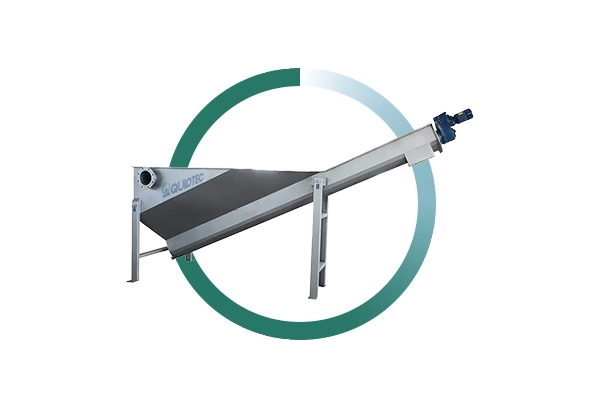




| Model | AQT-260 | AQT-320 | AQT-360 | AQT-420 |
| Screw Diameter (mm) | 220 | 280 | 320 | 380 |
| Capacity (L/s) | 5–12 | 12–20 | 20–27 | 27–35 |
| Motor Power (kW) | 0.37 | 0.37 | 0.75 | 0.75 |
| Rotation Speed (RPM) | 5 | 5 | 4.8 | 4.8 |

Features
Standard Features
- Stainless steel construction for corrosion resistance and long service life
- Inclined spiral screw conveyor for efficient grit transport and dewatering
- Hopper-based separation chamber for effective sedimentation
- Low-speed operation for improved settling efficiency and reduced wear
- Gear reducer drive system for smooth, stable operation
- Wear-resistant screw flights designed for abrasive conditions
- Wear-resistant liners or flexible bars in the trough for noise reduction and extended service life
- Open or enclosed trough configuration for flexible installation
Options & Accessories
- Shaftless spiral configuration for improved handling of difficult solids and reduced maintenance
- Grit washing system for the removal of organic content
- Integrated hydrocyclone system for enhanced separation efficiency
- Customised screw diameter and inclination for project-specific requirements
- Control panel with PLC automation for system integration

Working Principle
The Grit Classifier operates based on gravity separation and sedimentation principles. A grit slurry (typically 1–3% solids) enters the hopper, where heavier inorganic particles settle to the bottom while lighter organic material remains suspended and exits with the overflow. The settled grit is collected and conveyed upward by a slowly rotating inclined screw. As the material rises above the water level, excess water drains back into the hopper, allowing partial dewatering before discharge. The dewatered grit is discharged into a container for disposal, while clarified water returns to the treatment process.

Key Benefits
- High-Efficiency Grit Removal
Achieves separation efficiencies of up to 96–98%, effectively removing particles ≥ 0.2 mm and improving downstream process reliability. - Reduced Equipment Wear
Removes abrasive grit early in the process, protecting pumps, pipelines, and mechanical equipment from damage and extending service life. - Low Maintenance Operation
Shaftless or low-speed spiral design eliminates submerged bearings, reducing maintenance requirements and operational downtime. - Compact Design & Easy Installation
Compact structure with integrated drive system allows straightforward installation and user-friendly operation. - Quiet & Low-Wear Operation
Incorporates wear-resistant liners or flexible bars within the trough, reducing noise levels and extending equipment life in abrasive environments. - Stable & Continuous Performance
Designed for continuous duty with consistent grit separation under varying flow conditions.


