
Baghouse Dust Collector

Baghouse Dust Collector

Gas Cleaning & Emissions Control Systems
Baghouse Dust Collector cover

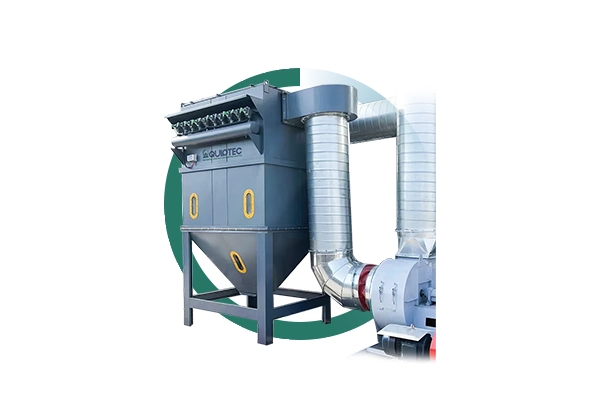
The baghouse dust collector is a system used to remove fine dust from industrial air. It uses fabric filter bags to trap dust while letting clean air pass through. A pulse jet cleaning system regularly clears the dust from the bags without stopping operation, so it runs continuously. It works well even with very fine or difficult dust particles. The design is compact and modular, with smooth airflow and easy dust removal. Suitable for many industries, it provides a reliable, safe, and cost-effective solution for dust control in demanding environments.

FA 01

1. What is a baghouse dust collector?

A baghouse dust collector is a filtration system that removes dust from industrial air using fabric filter bags.

2. What are the benefits of a baghouse dust collector?

It removes dust efficiently, runs continuously, handles collected dust easily, and performs reliably in different conditions.

3. Where is a baghouse dust collector used?

It is used in industries such as cement, mining, power plants, and manufacturing, where dust control is required. This system is used to capture fine dust particles from industrial gas streams, thereby improving air quality and meeting environmental standards.

4. Can the system be customised?

Yes, the baghouse dust collector can be designed with different bag materials, sizes, and control systems, depending on the dust type and operating conditions.

Specification and Parameters 01
Model Air volume (m³/h) Equipment dimensions (mm) Number of bags Bag specifications Pulse Configuration (pcs/1inch) Fan power (kw)
AQT-16 1000 760×760×3800 16 Ø133×2000 4 2.2
AQT-24 2000 1060×750×4000 24 Ø133×2000 6 2.2
AQT-36 3000 1070×1070×4100 36 Ø133×2000 6 3
AQT-48 4000 1440×1070×4200 48 Ø133×2000 8 4
AQT-64 5000 1440×1440×4300 64 Ø133×2000 8 5.5
AQT-72 6000 1550×1440×4400 72 Ø133×2000 9 5.5
AQT-80 6000 1770×1440×4400 80 Ø133×2000 10 7.5
AQT-96 7000 2100×1440×4400 96 Ø133×2000 12 11
AQT-100 8000 1770×1770×4400 100 Ø133×2000 10 11
AQT-120 10000 2100×1770×4400 120 Ø133×2000 12 15
AQT-160 14000 2780×1770×4400 160 Ø133×2000 16 18.5
AQT-200 16000 3400×1770×4600 200 Ø133×2000 20 22
Feature 01

Features

Standard Features

  • Fabric filter bag system for high-efficiency dust filtration
  • Pulse jet cleaning system with electromagnetic valve control
  • Multi-chamber structure with integrated ash hopper
  • Uniform airflow distribution for stable filtration performance
  • Sequential cleaning system for continuous operation
  • Sealed housing design to minimise air leakage
  • Compact modular structure for easy installation and maintenance

Options & Accessories

  • Various filter bag materials for different temperatures and dust types
  • Explosion-proof configuration for hazardous environments
  • PLC-based automatic control system
  • Differential pressure monitoring system
  • Rotary valve or screw conveyor for dust discharge
Working principl 01

Working Principle

The Baghouse Dust Collector (Pulse Jet Type) operates as a dry filtration system designed for the removal of fine, non-fibrous dust from industrial gas streams. Dust-laden gas enters the lower section of the unit and flows into the filter chamber. Larger and heavier particles settle directly into the ash hopper under gravity, while finer particles remain suspended in the gas stream.

As the gas passes through the fabric filter bags, dust particles are captured on the outer surface of the filter media, forming a dust layer that enhances filtration efficiency. Clean air passes through the bags and is discharged from the system. As dust accumulates, the resistance across the filter increases.
When a preset pressure drop is reached, the pulse cleaning system is activated. Compressed air is released through electromagnetic pulse valves in a controlled sequence, causing the filter bags to rapidly expand and contract.
This action dislodges the accumulated dust layer, which falls into the hopper and is discharged through the ash handling system. The cleaning process is carried out sequentially without interrupting airflow, ensuring continuous and stable operation.

Key Benefits 01

Key Benefits

  • High-Efficiency Dust Removal
    Achieves very high filtration efficiency, capable of capturing fine particles larger than 0.3 microns and reducing outlet dust concentration to approximately 15 mg/m³ or lower.
  • Continuous Online Cleaning Performance
    Pulse jet cleaning system allows automatic removal of dust from filter bags without interrupting operation, ensuring stable airflow and consistent filtration efficiency.
  • Cost-Effective System Design
    Requires fewer auxiliary systems compared to electrostatic precipitators, resulting in lower capital investment and simplified operation.
  • Effective for Fine and Complex Dust
    Capable of capturing fine, dry particles as well as compounds such as nitrates and sulphides that are difficult to remove using conventional systems.
  • Adaptable to Variable Operating Conditions
    Maintains reliable performance under fluctuating load conditions, making it suitable for a wide range of industrial processes.
  • Safe and Reliable Operation
    Provides stable dust collection in environments containing explosive dust or spark-laden gases.
  • Easy Dust Handling and Recovery
    Collected dry dust is easy to discharge, transport, and recycle, supporting efficient material recovery.
Key-mobile

Key Benefits

  • High-Efficiency Dust Removal
    Achieves very high filtration efficiency, capable of capturing fine particles larger than 0.3 microns and reducing outlet dust concentration to approximately 15 mg/m³ or lower.
  • Continuous Online Cleaning Performance
    Pulse jet cleaning system allows automatic removal of dust from filter bags without interrupting operation, ensuring stable airflow and consistent filtration efficiency.
  • Cost-Effective System Design
    Requires fewer auxiliary systems compared to electrostatic precipitators, resulting in lower capital investment and simplified operation.
  • Effective for Fine and Complex Dust
    Capable of capturing fine, dry particles as well as compounds such as nitrates and sulphides that are difficult to remove using conventional systems.
  • Adaptable to Variable Operating Conditions
    Maintains reliable performance under fluctuating load conditions, making it suitable for a wide range of industrial processes.
  • Safe and Reliable Operation
    Provides stable dust collection in environments containing explosive dust or spark-laden gases.
  • Easy Dust Handling and Recovery
    Collected dry dust is easy to discharge, transport, and recycle, supporting efficient material recovery.
working-mobile

Working Principle

The Baghouse Dust Collector (Pulse Jet Type) operates as a dry filtration system designed for the removal of fine, non-fibrous dust from industrial gas streams. Dust-laden gas enters the lower section of the unit and flows into the filter chamber. Larger and heavier particles settle directly into the ash hopper under gravity, while finer particles remain suspended in the gas stream.

As the gas passes through the fabric filter bags, dust particles are captured on the outer surface of the filter media, forming a dust layer that enhances filtration efficiency. Clean air passes through the bags and is discharged from the system. As dust accumulates, the resistance across the filter increases.
When a preset pressure drop is reached, the pulse cleaning system is activated. Compressed air is released through electromagnetic pulse valves in a controlled sequence, causing the filter bags to rapidly expand and contract.
This action dislodges the accumulated dust layer, which falls into the hopper and is discharged through the ash handling system. The cleaning process is carried out sequentially without interrupting airflow, ensuring continuous and stable operation.

Features-mobile

Features

Standard Features

  • Fabric filter bag system for high-efficiency dust filtration
  • Pulse jet cleaning system with electromagnetic valve control
  • Multi-chamber structure with integrated ash hopper
  • Uniform airflow distribution for stable filtration performance
  • Sequential cleaning system for continuous operation
  • Sealed housing design to minimise air leakage
  • Compact modular structure for easy installation and maintenance

Options & Accessories

  • Various filter bag materials for different temperatures and dust types
  • Explosion-proof configuration for hazardous environments
  • PLC-based automatic control system
  • Differential pressure monitoring system
  • Rotary valve or screw conveyor for dust discharge

SaP
Model Air volume (m³/h) Equipment dimensions (mm) Number of bags Bag specifications Pulse Configuration (pcs/1inch) Fan power (kw)
AQT-16 1000 760×760×3800 16 Ø133×2000 4 2.2
AQT-24 2000 1060×750×4000 24 Ø133×2000 6 2.2
AQT-36 3000 1070×1070×4100 36 Ø133×2000 6 3
AQT-48 4000 1440×1070×4200 48 Ø133×2000 8 4
AQT-64 5000 1440×1440×4300 64 Ø133×2000 8 5.5
AQT-72 6000 1550×1440×4400 72 Ø133×2000 9 5.5
AQT-80 6000 1770×1440×4400 80 Ø133×2000 10 7.5
AQT-96 7000 2100×1440×4400 96 Ø133×2000 12 11
AQT-100 8000 1770×1770×4400 100 Ø133×2000 10 11
AQT-120 10000 2100×1770×4400 120 Ø133×2000 12 15
AQT-160 14000 2780×1770×4400 160 Ø133×2000 16 18.5
AQT-200 16000 3400×1770×4600 200 Ø133×2000 20 22
FAQ

1. What is a baghouse dust collector?

A baghouse dust collector is a filtration system that removes dust from industrial air using fabric filter bags.

2. What are the benefits of a baghouse dust collector?

It removes dust efficiently, runs continuously, handles collected dust easily, and performs reliably in different conditions.

3. Where is a baghouse dust collector used?

It is used in industries such as cement, mining, power plants, and manufacturing, where dust control is required. This system is used to capture fine dust particles from industrial gas streams, thereby improving air quality and meeting environmental standards.

4. Can the system be customised?

Yes, the baghouse dust collector can be designed with different bag materials, sizes, and control systems, depending on the dust type and operating conditions.